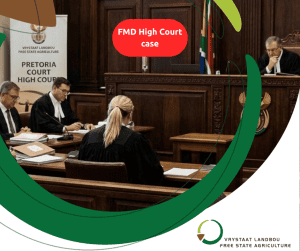
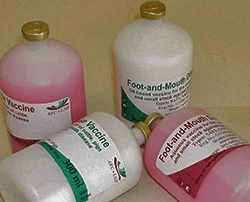


Free State Agriculture (FSA), Sakeliga and SAAI will appear in the High Court on Tuesday, 24 March 2026 in an urgent application to prevent the government from blocking the private procurement and administration of foot-and-mouth disease (FMD) vaccines.
FSA president Francois Wilken confirmed that the parties participated in court-mandated mediation between the parties involved last week. Wilken says that the mediation was unsuccessful and the case will now be heard on an urgent basis in the High Court in Pretoria.
“The hearing on March 24 concerns the first phase of the application, namely an interdict to prevent the state from blocking private persons and entities from administering registered or approved FMD vaccines to livestock. The application also asks that the state not interfere with contractual agreements between legal vaccine importers and their suppliers.”
Wilken confirms that all court documents have already been filed by the parties involved, with the exception of the Minister of Agriculture’s affirmative affidavit which is still outstanding. A review application, which will form the second phase of the process, will follow at a later stage. This review application will, among other things, seek confirmation that there is no legal impediment preventing livestock owners from administering vaccines, or alternatively that any such impediment be set aside.
Free State Agriculture says the court application follows the failure of the Minister of Agriculture to provide a legal basis for his ban on the private procurement and administration of FMD vaccines. Agricultural officials’ interference in private vaccine import agreements has already caused great uncertainty and significant production losses in the agricultural sector.
Free State Agriculture emphasises that nothing in the application will prevent the minister or other officials from fulfilling their legal duties or from combating the disease. However, if the application is successful, farmers and other livestock owners will immediately be able to have their own cattle – and other livestock – vaccinated with their own resources, with the necessary reporting as required.
“It remains inexplicable why the minister opposes a parallel approach where the state and the private sector can combat the disease together, rather than limiting the process exclusively to the capacity of the department,” concludes Wilken.
8Posts
4Posts
11Posts
9Posts
68Posts
31Posts
16Posts
18Posts
11Posts
9Posts
180Posts
15Posts
13Posts